
Almost nobody comes to memory care on a planned schedule. Families arrive after a string of small incidents that finally add up. The stove burner left on twice in one week. A 2 a.m. phone call from Dad because he can't find his wife, who died in 2011. A mother wearing three sweaters in August because she can't feel the difference anymore.
By the time the family starts searching, everyone is exhausted and the decision gets made under pressure. That is the worst possible condition for a decision this big.
Frisco families have their own version of this problem. A lot of the parents living here didn't grow up in Texas. They came from Ohio or Chennai or Lagos to be near adult children who moved for jobs along the Tollway. The old support network, the neighbor who noticed things and the friend who called every Tuesday, is a thousand miles away. When memory starts slipping, there's often nobody nearby to catch the early signs except a daughter who is already working full time and sitting in the Frisco ISD carpool line at 3 p.m.
So memory care in this city is less a question of which building to tour and more a question of coverage. Who is actually with your parent for how many hours and does that person know what they're doing?
Why dementia care is a different job than ordinary senior care
Someone recovering from a hip replacement needs help with a task. Someone with Alzheimer's needs help with the approach to the task. The physical part is the easy part.
Take bathing. A woman refusing to shower usually isn't being stubborn. She may not recognize the bathroom. Water hitting skin can feel alarming when the brain can no longer predict what's coming. She's being undressed by a person she doesn't remember hiring, and asked to stand on a slick surface. A caregiver who announces, "Time for your shower, Mrs. Patel," gets in a fight. A caregiver who warms the room first, lays out her own robe where she can see it, talks about something unrelated, and lets her hold the sprayer herself, gets her clean and keeps her dignity intact.
Same task, entirely different skill.
An untrained caregiver will try to reason with her, then push through the resistance when reasoning fails. Both approaches poison the next visit too. She may not remember the argument, but she will remember that this person makes her feel bad. Emotional memory outlasts factual memory by years, and that single fact explains most of what separates good dementia care from bad.
Frisco specifics that change how a care plan gets built
Heat is the first one. Between June and September, an hour outdoors can be dangerous for a person who has lost the ability to recognize thirst or find the way home. Wandering in North Texas is not the same risk as wandering in Michigan. Door alarms and a GPS tracker stop being optional somewhere around May.
Then there's the way this city is built. Many Frisco subdivisions went up all at once, so the houses repeat, the streets curve back on themselves, and there are few old landmarks to steer by. A parent in the early stage who has walked the same block for years can lose the thread three houses from home. It catches families completely off guard, because the person seems fine otherwise.
Most of the housing stock here is two stories. When a parent moves in with an adult child, the guest room is almost always upstairs, and those stairs turn into a nightly fall risk. Converting a downstairs office or the formal dining room nobody uses into a bedroom is the cheapest safety upgrade most families will ever make.
One more, and it gets overlooked. Frisco has good hospitals, which is a comfort until you understand what an emergency room does to a person with dementia. The noise, the lights, the strangers, hours parked on a gurney under fluorescent glare. Someone can go in with a urinary tract infection and come home noticeably more confused than they left, and it can take weeks to claw that ground back. A care plan that catches dehydration and infection early is worth more than proximity to a good ER.
Matching the help to the stage, not to the diagnosis
A diagnosis tells you what's happening. The stage tells you what to actually do about it.
Early stage: supervision that doesn't feel like being supervised
The hardest part here isn't the caregiving. It's the person's pride. They know something is wrong, they're frightened by it, and help that feels like management gets rejected on principle.
What works is a caregiver who arrives as a companion rather than a nurse. She drives to appointments. She cooks alongside him instead of for him. She keeps the pill organizer filled without making a production of it, and she quietly keeps the mail and the checkbook from becoming a disaster, because financial scammers hunt this stage specifically.
This is also the window for the paperwork, and families miss it constantly. Durable power of attorney, medical power of attorney, HIPAA releases. Those need a signature while the person still has the capacity to give one. Wait too long and you're in guardianship court instead, which is slow, expensive, and completely avoidable.
Middle stage: the long stretch where most families break
This phase can run for years and it's the one that ends home care plans.
The behavior changes show up here. Restlessness that builds through the late afternoon. The same question asked eleven times in an hour. An accusation that the caregiver stole a purse that your mother hid herself and then forgot about. Bathing refusals, incontinence, sleep that flips itself upside down.
What changes is that your father no longer needs a helper. He needs a watcher. You cannot leave the room for forty minutes, and that distinction is what burns families out.
The care itself becomes structural: the same caregiver, arriving at the same time, running the day in the same order. One family I'd point to as a model had a retired engineer who tried to leave "for work" every afternoon around 4:30. Arguing with him produced a fight every single day. His caregiver learned his history, and started handing him a folder of papers at 4:15 with a request to review them at the kitchen table. He'd work. The urge would pass. Nobody blocked the door, nobody lied to him about anything that mattered, and the afternoons stopped being a battle.
Late stage: physical care and the conversations people avoid
Language mostly goes. Walking goes. Swallowing becomes unsafe, which is why food texture and how someone is positioned during a meal turn into daily concerns rather than fussy details. Weight drops. Skin breaks down where the body presses against a chair or a mattress.
Care here is hands on and physically demanding: transfers, repositioning every couple of hours, help with feeding, watching for choking and for pressure sores. It's also the point where hospice can work alongside private caregivers rather than replacing them, and where a family should already know what they want. Nobody makes a good decision about a feeding tube in the back of an ambulance.
What competent memory care looks like on an ordinary Tuesday
Strip away the brochure language and daily quality comes down to a handful of things:
- The same caregiver, on the same days. Every new face resets trust from zero and can cost you an entire anxious afternoon.
- A routine built around who the person used to be. A retired teacher often settles when she has papers to sort. A man who ran a warehouse floor wants to carry something, so give him something to carry.
- Food and fluids watched closely, without turning meals into a standoff. Dehydration and infection sit behind a startling share of sudden confusion.
- Written notes on what triggered a bad hour, so the trigger can be removed. Was the evening news on? Did the room go dim at four o'clock and fill with shadows?
- Medication given on time, with someone confirming it actually went down.
- Activity matched to what's still intact. Folding laundry, walking, music from the right decade, hands in soil. Not a children's coloring book pushed at a man who used to run a company.
- Honest reporting to the family, including the parts nobody wants to hear on a Friday night.
Staying home or moving to a community: how to think it through
Familiarity does real work. A house someone has lived in for fifteen years is doing part of the job of orienting them, through habit and muscle memory rather than conscious thought. Move them and that work has to be redone, which is why the weeks after a move are usually rough.
But home only holds if the house is safe and the coverage is real. Nights are where home plans fall apart. If your mother is up and moving at 3 a.m., somebody has to be up and moving at 3 a.m., and that somebody cannot be a daughter with a 7 a.m. standup call.
The money is worth working out honestly. In-home care is billed by the hour and a memory care community is billed by the month. At twenty or thirty hours a week, home is dramatically cheaper. As the hours climb toward round the clock, the two costs converge and eventually flip.
What pushes a family toward a community: transfers that take two people, aggression that puts someone at risk or a spouse whose own health is now failing under the weight of it. What keeps someone home: a stable routine, another adult in the house, nights that are still manageable, and a caregiver who fits.
My honest read, having watched a lot of families do this, is that most move too late rather than too early. And they move in a crisis instead of on a plan.
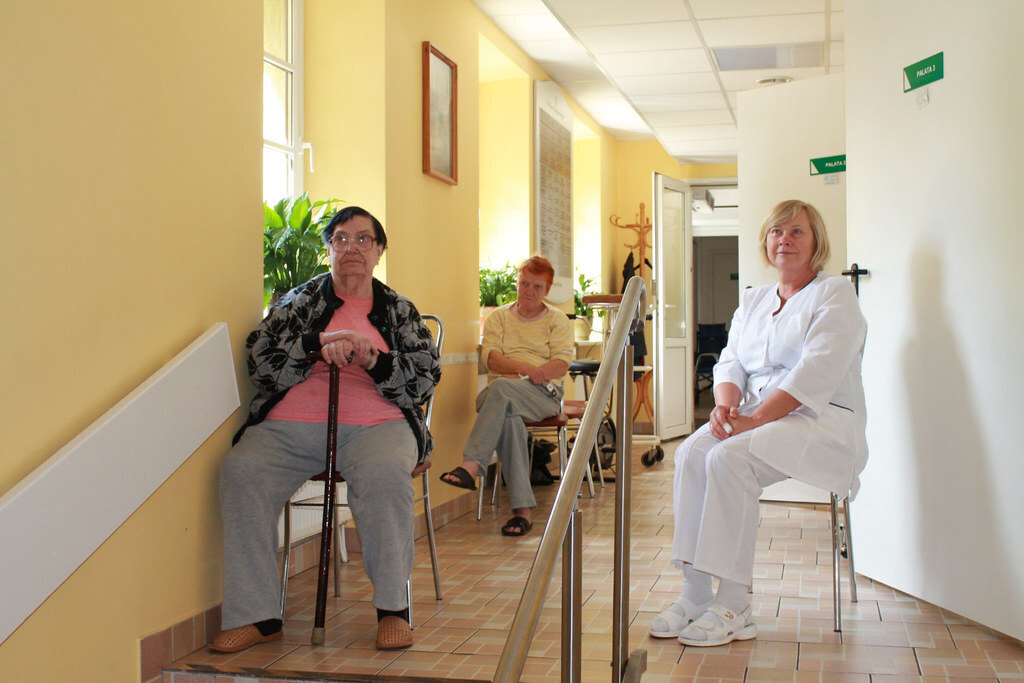
How to actually vet a memory care provider in Frisco
Ask these, and listen to how quickly the answers come:
- What dementia specific training do your caregivers get, and who teaches it? "Years of experience with seniors" is not an answer to this question.
- Will the same caregiver be assigned? When she's sick, who comes instead, and has that person met my mother before?
- Walk me through how your caregiver would handle a client who accuses her of stealing. If the answer involves defending herself or proving her innocence, keep looking.
- Who writes the care plan, and how often does it get rewritten as the disease moves?
- Does a supervisor come to the house? How often, and unannounced?
- How will you communicate with me? Daily notes, or a call after a bad day?
- Are caregivers employees of the agency, background checked, insured, and covered by workers' comp? A privately hired caregiver is cheaper right up until something goes wrong in your house.
Texas licenses home care agencies through the state health and human services agency. Ask to see the license. Ask whether there have been complaints.
The clearest warning sign is an agency that promises it can handle absolutely anything you describe. Dementia care involves genuinely hard days, and a provider who won't say that out loud is selling you availability rather than skill.
The family is the second patient
Burnout isn't a soft concern to note in passing. It is the single most common reason a home care plan collapse.
It looks like a daughter who hasn't slept through the night in eight months, who quietly stopped seeing her friends, who is short with her own kids and hates herself for it. Underneath that sits a grief that has nowhere to go, because she is mourning a mother who is still sitting at the table.
Respite hours are a legitimate use of care, not a luxury and not a moral failure. Two days a week of real coverage can restore a person's judgment enough to make better decisions about everything else.
Sibling conflict runs a close second. The one who lives in Frisco does the work. The one in Seattle has opinions. Get everybody onto a single written care plan, even if it takes an ugly phone call to do it.
There's one more thing families rarely think of. Learn the same techniques the caregiver uses, so your father isn't handled one way at 10 a.m. and a completely different way at dinner. Consistency across everyone in the house is one of the most underrated things you can do for him and it costs nothing.
Paying for it and the paperwork you want in place first
Medicare does not pay for long-term custodial care, and this surprises nearly everyone. It can cover short-term skilled home health after a hospital stay, physician visits, and hospice at the end of life. The daily supervision and hands-on help that dementia requires is not a Medicare benefit.
That leaves private pay, long-term care insurance, veterans benefits and Medicaid. Long-term care policies often do cover in-home care and a cognitive diagnosis frequently triggers benefits on its own. Check the elimination period, because claims take time to process and families are usually already paying out of pocket while they wait. Wartime veterans and surviving spouses may qualify for Aid and Attendance, which adds a monthly amount to a pension for people who need help with daily activities. Texas Medicaid runs waiver programs that can fund attendant care at home for those who meet the financial and functional rules, though eligibility is complicated enough that an elder law attorney is a better guide than a search engine.
None of this is advice specific to your situation, and the rules shift. What I'd say with confidence is that the families who look at money and legal documents in the first month after a diagnosis have far more options than the ones who look at it in year three.
Where this leaves Frisco families
Dementia doesn't get better and no amount of good care changes that. What good care changes is everything around it: whether your mother spends her afternoons frightened or calm, whether she lands in an emergency room four times this year or none, whether your family is still speaking to each other in two years.
The best predictor of how a family gets through this isn't the diagnosis or even the stage. It's whether help arrived before the crisis or after it.
If there's a direction worth watching, it's that keeping people at home is becoming more workable than it was a decade ago. Diagnosis is coming earlier; home safety technology is cheap now and there are more caregivers with real dementia training available in North Texas than there used to be. The old choice between struggling alone and moving a parent into a facility is less binary than it looks. That's good news for the families who moved to Frisco precisely so they could have a parent close by.
But it only works if the help coming through the door knows what it's doing and if it shows up before you're desperate. Sign the papers early. Have the ugly conversations early. Bring someone in while you can still interview them properly, because the family making decisions on a Tuesday afternoon is a very different family from the one making them at 2 a.m. in a hospital hallway.
Frequently asked questions
What's the difference between memory care and regular home care?
Regular home care helps with tasks: meals, bathing, laundry, errands. Memory care starts from the assumption that the person can't reliably reason, remember or follow instructions so the caregiver is trained in redirection in handling wandering and late-day agitation and in keeping the environment safe. Same hours, very different skill set.
How do we know it's time to bring in help?
The usual triggers: a fall, a burner left on, medications missed or doubled, unexplained weight loss, getting lost somewhere familiar, or a spouse who is visibly running on empty. If you are already asking the question, you are usually past "not yet."
Does Medicare pay for memory care in Frisco?
Not for the ongoing daily care dementia requires. Medicare covers short-term skilled home health after a hospitalization, doctor visits and hospice. Long-term custodial care is paid privately, through long-term care insurance, through VA benefits or through Medicaid if the person qualifies.
My father refuses to have a caregiver in the house. What now?
Don't introduce her as a caregiver. She's the housekeeper the driver, a friend helping you out whatever fits the story he tells himself. Start with short visits doing something he wants, like a ride to the barber, rather than something he resents, like a shower. Resistance usually fades once the face is familiar. Arguing about whether he needs help never works.
Is it better to keep a parent with dementia at home or move them to a memory care community?
Home tends to work well through the early and middle stages, as long as the nights are manageable and the house has been made safe. A community makes more sense when care needs go around the clock, when transfers take two people, or when behavior puts someone at risk. On cost, home is far cheaper at lower hours and loses that advantage as coverage approaches 24/7.