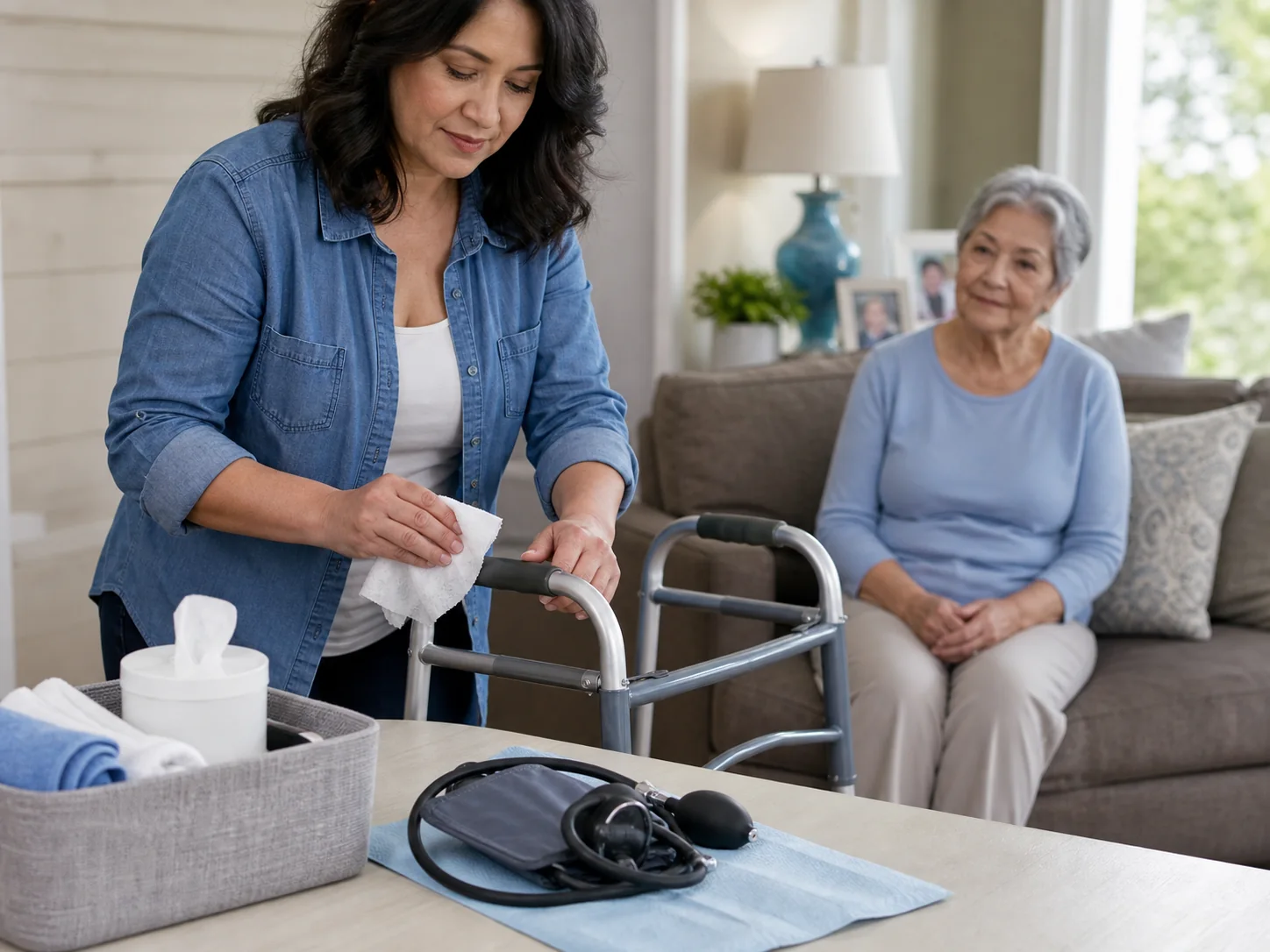
For a person receiving care at home, items such as walkers, wheelchairs, blood-pressure cuffs, thermometers, bedside tables, bed rails, remotes, phones, bathroom grab bars, and medication-storage areas may be touched many times throughout the day. CDC recommends cleaning and disinfecting surfaces in close proximity to the patient and frequently touched surfaces on a more frequent schedule than other surfaces.
Reusable equipment in the home may include blood-pressure monitors, pulse oximeters, thermometers, glucose meters, walkers, wheelchairs, shower chairs, transfer equipment, and respiratory equipment. CDC says reusable medical equipment should be cleaned and reprocessed before use on another patient or when soiled, and manufacturers’ instructions for reprocessing should be followed.
Cleaning removes dirt and some germs, while disinfecting uses a product designed to kill many remaining germs on a surface. CDC advises selecting appropriate disinfectants and following manufacturers’ instructions for dilution, contact time, material compatibility, storage, shelf life, safe use, and disposal.
Families should never mix cleaning chemicals and should store cleaning products away from children, pets, food, medications, and medical supplies. OSHA’s home healthcare materials are relevant because home healthcare workers can face chemical and environmental hazards in the home, making product handling and storage important for safety as well as infection prevention.
Families can reduce cross-contamination by storing clean medical supplies in a dry, protected area, separating clean and dirty items, cleaning reusable equipment before storing it, and keeping laundry and waste away from medication areas. CDC specifically recommends maintaining separation between clean and soiled equipment to prevent cross contamination.
A simple, organized care space can make infection prevention easier for everyone.
My Heart Care Services helps families and caregivers build realistic routines for cleaning high-touch surfaces and reusable equipment in the home.
Educational notice: This material is for general information only. It does not replace medical advice, a diagnosis, a physician’s order, or emergency care.
Source links used in this article:
-
CDC Core Infection Prevention and Control Practices: https://www.cdc.gov/infection-control/hcp/core-practices/index.html
-
CDC Standard Precautions for All Patient Care: https://www.cdc.gov/infection-control/hcp/basics/standard-precautions.html
-
OSHA Home Healthcare Overview: https://www.osha.gov/home-healthcare