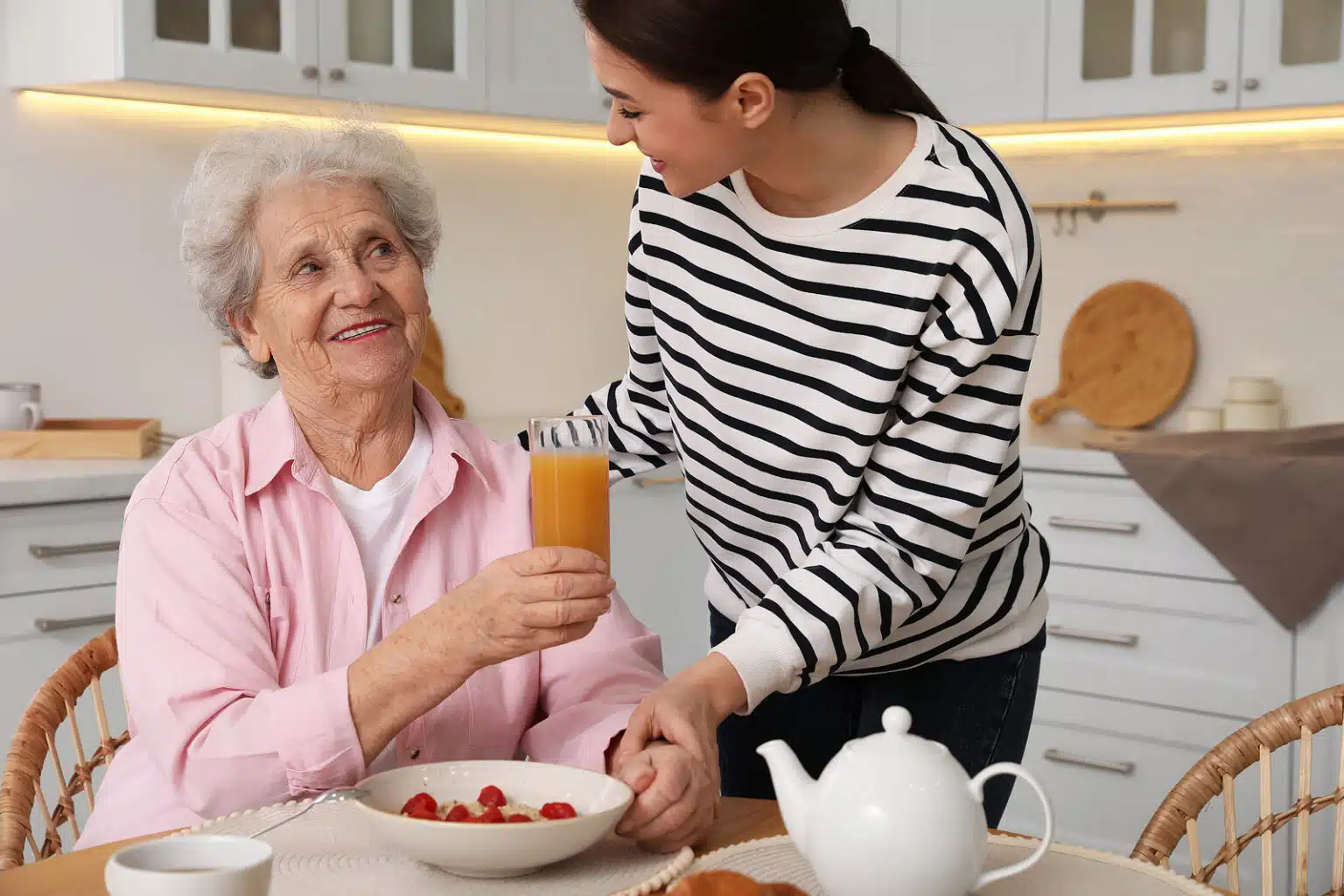
Most older adults will tell you the same thing when the subject comes up: they want to stay in their own home. Not a facility. Not a spare room at their daughter's place across town. The house they know with the coffee mugs in the right cupboard and the neighbors they've waved to for twenty years.
The trouble is that homes don't adapt on their own. The bathtub that was never a problem becomes a problem. The stairs get a little steeper every year, even though they haven't moved an inch. And most of the time, nobody notices the risk until there's an incident to point to. A fall. A missed dose. A pot left on the burner.
In-home care exists for exactly that gap. It's the difference between hoping a parent is fine and knowing someone is there. For families in Plano, where a lot of adult children are juggling full-time jobs and a forty-minute drive to check on Mom that difference matters more than it might sound.
The house hasn't changed but the person living in it has
Aging in place is the goal for good reasons. People do better in familiar surroundings. Routines hold. There's less to get confused by. But the same house that supports independence can quietly fill up with hazards and the changes that create them are easy to miss from a distance.
Balance tends to shift first, usually before anyone brings it up. Eyesight dims in low light. Grip weakens. Reaction time slows so the quick grab for the counter that used to catch a stumble doesn't come fast enough anymore. Add a medication or two that cause dizziness or drop blood pressure on standing and an ordinary hallway becomes something a person has to think their way across, though they rarely do because they've walked it ten thousand times.
Here's what makes it hard for families: the parent on the phone almost always says "I'm fine." They're not lying. They do feel fine sitting in their chair. The risk lives in the specific moments nobody's around for, like climbing out of the bathtub or crossing to the kitchen in the middle of the night. In-home care puts a trained person in those exact moments.
Falls are the risk that quietly reshapes everything
A fall is rarely just a fall. A broken hip at 80 can mean surgery, weeks of rehab, a lasting loss of confidence, and sometimes the end of living alone at all. That's why fall prevention sits at the center of home safety, and why it's the thing a good caregiver thinks about constantly.
Where falls usually happen
Most falls have nothing to do with anything dramatic. They happen on the way to the bathroom at 2 a.m., in the dark, when someone stood up too fast and got lightheaded. They happen stepping out of the shower onto wet tile. They happen catching a slipper on the edge of a rug that's been in the same spot for fifteen years. The bathroom, for all its ordinariness, is one of the most dangerous rooms in the house.
What a caregiver changes
A caregiver shifts the odds in ways that are mostly small and unglamorous:
- Being present for the risky routines, especially getting in and out of the shower or tub, and the middle-of-the-night bathroom trip
- Steadying transfers, like moving from the bed to a chair or from sitting to standing, so a wobble doesn't turn into a fall
- Clearing the everyday hazards: loose rugs, cords, and clutter along the paths a person walks
- Making sure the walker or cane is within reach and getting used, not parked in another room
- Keeping an eye on footwear, since socks on hardwood send more people to the floor than you'd think
- Improving the lighting on the routes used at night
None of that takes heroics. It takes someone paying attention to the details the person themselves stopped noticing years ago.
Keeping a dozen medications straight
By a certain age, a lot of people are managing more prescriptions than anyone could comfortably track. One for blood pressure, one for cholesterol, something for the heart, a blood thinner, maybe insulin, plus a few things for arthritis or sleep. Some go with food. Some don't. Some are morning only. Miss one, or take it twice, and the fallout ranges from uncomfortable to dangerous.
It gets harder when memory starts to slip. The problem isn't only forgetting to take a pill. It's not being able to recall whether you already took it, which leads to skipped doses some days and doubled ones on others. A doubled blood pressure pill can leave a person faint enough to fall. A missed blood thinner carries its own serious risk. These are not forgiving margins.
An in-home caregiver keeps the routine on track. Usually that means reminders at the right times of day, help keeping pills organized in a way the person can follow, and an eye out for side effects like new dizziness, drowsiness, or confusion that might mean something needs a second look from the doctor. A caregiver also tends to catch the practical things families miss, like a prescription running low before anyone thought to reorder it. (What a caregiver can and can't do with medication depends on their role and on state rules, so the specifics get sorted out with the family and, when there is one, the nurse.)
Someone there when minutes matter
The scenario that keeps adult children up at night is the one where a parent lives alone, something happens, and nobody knows for hours. A fall with the phone out of reach. A stroke that starts while they're making breakfast. A blood sugar crash. The event itself is frightening enough. The delay is what turns it into a tragedy.
A caregiver in the home cuts that delay to nothing. Someone is there to call 911, to help until the paramedics arrive, and to reach the family. That alone is worth a great deal. But there's a quieter benefit that counts just as much. A caregiver who sees a person regularly learns their baseline: how they normally talk, move, and act. So when something is off, they notice fast. Slightly slurred speech and a drooping face read as a possible stroke to someone who knows what normal looks like, and with a stroke, how quickly that gets recognized can change the whole outcome. A sudden spike in confusion might be the first sign of a urinary tract infection, which in older adults often shows up as disorientation before anything else does.
Families can't be there every hour. A trained caregiver can, and can tell the difference between a normal off day and the start of something that needs a doctor.
The dangers families rarely think to look for
Falls and medications get most of the attention, and they should. But plenty of what makes a home unsafe for an older adult sits outside those two. These are the risks that tend to catch families off guard, usually because they never came up while the person was younger and fully independent:
- Wandering. For someone with dementia or Alzheimer's, leaving the house and losing track of where they are is a real danger, and it often happens at night. Supervision and a secured home head off a frightening situation before it starts.
- Scams and financial exploitation. Older adults are heavily targeted by phone, mail, and online fraud, from fake tech-support pop-ups to the "grandchild in trouble" call begging for money. A trusted caregiver is a second set of eyes who can help screen strange calls and unfamiliar visitors at the door.
- Poor nutrition and dehydration. When cooking becomes tiring, meals get skipped and the diet shrinks to toast and tea. Not drinking enough water is just as common. Both lead to weakness, confusion, and more falls. A caregiver who makes real meals and keeps fluids up removes a risk most families never see.
- Kitchen and fire safety. A burner left on or a pot forgotten on the stove is a common hazard as memory fades. Handling or supervising the cooking takes that worry off the table.
- Isolation. Loneliness does more than make someone unhappy. In older adults it's linked to faster decline in mood and thinking, and an isolated person's problems go unnoticed far longer. Regular company is a safety measure in its own right.
What makes home safety different in Plano
Every region adds its own wrinkles to senior safety, and North Texas is no exception. A few things are worth thinking about specifically for anyone caring for an older adult here.
Summer heat is the local risk that gets underestimated
Plano summers are long and punishing, and older bodies handle heat poorly. Seniors sweat less, feel thirst less reliably, and some common medications make heat sensitivity worse. Plenty of them also keep the thermostat higher than they should to hold the electric bill down. Heat exhaustion and heat stroke are dangerous and almost entirely preventable, and a caregiver keeps the house cool, the water coming, and any errands scheduled away from the worst of the afternoon.
Winter storms and being stranded
The occasional ice storm that rolls through can knock out power and turn the front steps into a sheet of ice. For someone living alone, that can mean being stuck without heat or groceries, plus a real slipping hazard the moment they open the door. Having someone on hand for storm prep, and during the storm itself, takes most of that danger away.
A city spread out, with families spread out too
Plano covers a lot of ground, and families are scattered across it and well beyond. Many adult children work full time or live in another suburb, and driving over to check on a parent every single day isn't realistic. In-home care fills the space between family visits, so a parent isn't leaning on a once-a-week drop-in as their only safety net.
The caregiver who knows a parent by name
There's a difference between having care and having care a person will accept. A lot of seniors push back at first. Letting someone into the bathroom, or being reminded to take a pill, can feel like proof they're losing their grip on their own life. That resistance is a safety problem by itself, because a caregiver can only help with what the person allows.
Consistency is what softens it. When the same caregiver comes back day after day, a relationship forms and the help stops feeling like an intrusion. The senior loosens up, cooperates, and often starts looking forward to the company. A familiar caregiver is also more likely to be trusted with the sensitive things, like personal hygiene or admitting to a dizzy spell they'd have hidden from a stranger. That trust is a big part of why continuity of care matters so much, and why a rotating lineup of unfamiliar faces tends to work poorly no matter how skilled each person is.
Putting help in place before you need it
Safe aging at home comes from a stack of small things working together: catching the fall before it happens, keeping the medications straight, having someone present when something goes wrong, watching for the risks that don't announce themselves, and accounting for the particular challenges of living in Plano. In-home care covers all of it at once and it does so in a way that lets a person hold on to the home and the independence they don't want to surrender.
This kind of support is only going to be needed more. Plano's older population keeps growing, more families are choosing to help a parent age at home instead of moving them and the demand for dependable in-home care is climbing alongside it. For most families the parent could clearly use some help already. The harder part is timing: getting the right support in place before an incident forces the decision, rather than after it.
Frequently asked questions
How do I know when a parent needs in-home care?
Watch for the practical signs: a recent fall or unexplained bruises, expired food or a bare fridge, missed medications, unopened mail and unpaid bills, weight loss or a home that's less tidy than they usually keep it. You rarely have to wait for a crisis. If everyday tasks are visibly getting harder, that's the moment to start the conversation.
Is in-home care only for seniors with medical conditions?
No. Much of in-home care is non-medical and centered on daily living: help with bathing and dressing, meals, medication reminders, light housekeeping, and companionship. Families often bring it in for safety and support well before any serious medical need appears.
How many hours of care can we arrange?
It's flexible. Some families start with a few hours a couple of days a week; others need daily help, overnight coverage or care around the clock. Plans usually shift over time as needs change so you're not locked into one level.
Will my parent resist having a caregiver in the house?
Often at first, yes, because independence is hard to hand over. A short trial period, starting with light help rather than personal care and keeping the same caregiver on each visit all make the transition easier. Most seniors who resisted early on settle in once the routine becomes familiar.
How is in-home care different from a nursing home or assisted living?
In-home care lets a person stay in their own home and keeps the attention one-on-one built around their routine. Assisted living and nursing homes move the person into a facility with shared staff and set schedules. For families whose priority is aging in place in-home care is the option that keeps home in the picture.